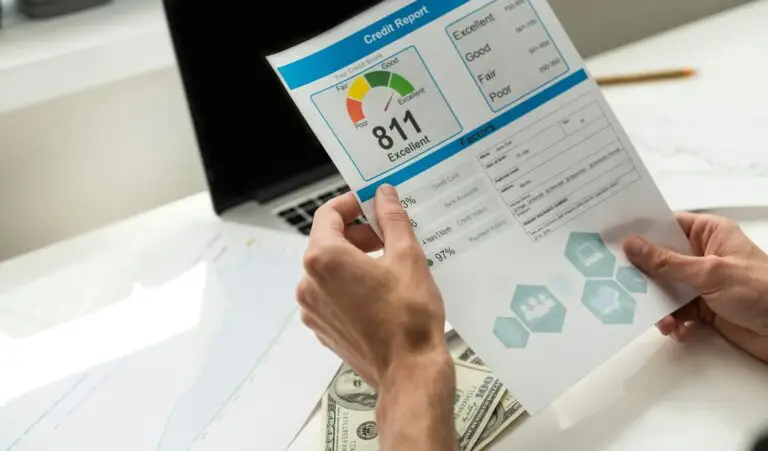
If you applied for a home loan five years ago, your file probably sat on someone’s desk for a few days before a human underwriter looked at it. In 2026, that’s not how it works anymore — and the change matters more than most consumers realize.
The mortgage industry has quietly gone through one of the biggest structural shifts in its history. AI is now embedded in nearly every step of the underwriting process. Documents are being read, parsed, and verified by machine learning models. Income is being validated through payroll APIs instead of pay stubs. Bank statements are being analyzed for cash flow patterns in seconds. And the credit scoring models used to evaluate borrowers are being modernized for the first time in decades.
One thing we commonly see at American Score Increase is consumers walking into a mortgage application thinking they know what to expect — and then getting blindsided by how granular today’s lenders have become. A misreported balance from 18 months ago. One charge-off updating monthly. Maybe a duplicate collection account. Things that might have slipped through under a human underwriter’s eyes are getting flagged instantly by automated systems.
This article breaks down what’s actually happening inside mortgage underwriting in 2026, why your credit report matters more than it ever has, and what you can do to make sure the version of you that the AI sees is the accurate one.
What AI Mortgage Underwriting Actually Looks Like in 2026
Let’s start with what changed. For decades, mortgage underwriting was a manual process. An underwriter pulled your credit report, read through your tax returns, eyeballed your bank statements, and made a judgment call on whether you’d repay the loan. Computers helped, but the human was the decision-maker.
That model is gone for most loans.
Today’s mortgage lenders rely on automated underwriting systems (AUS) that use AI and machine learning to evaluate borrowers. Fannie Mae’s Desktop Underwriter (DU) and Freddie Mac’s Loan Product Advisor (LPA) have been around for years, but the latest versions are far more powerful than they used to be — and the lenders sitting on top of them have added their own AI layers.
How a Modern Mortgage File Moves Through the System
Here’s roughly what a modern mortgage file looks like as it moves through the system:
- Document ingestion. Your pay stubs, W-2s, tax returns, and bank statements are scanned with OCR and parsed into structured data. Better Mortgage’s “Tinman” engine, Rocket’s “Rocket Logic,” and platforms like Ocrolus and Candor are processing millions of data points per month with very little human touch.
- Income and employment verification. Instead of waiting for an employer to return a verification form, lenders now pull data directly from payroll providers and banking APIs. Cash flow underwriting is moving from a niche tool to a mainstream practice.
- Credit analysis. Your credit report is pulled and run through the lender’s scoring models. In 2026, this is where the biggest shift is happening — more on that in a moment.
- Fraud detection. AI models cross-reference your file against historical patterns. Fannie Mae partnered with Palantir on mortgage fraud detection, and most major lenders now use AI fraud screens that flag anomalies humans would miss.
- Condition clearing. Some lenders now report auto-clearing 70–75% of credit, income, and asset conditions without underwriter touch, with targets pushing past 85% by late 2026.
- Decisioning. The system spits out an approval, a referral for human review, or a denial — often within minutes.
Why Speed Isn’t the Only Thing That Changed
What used to take weeks of back-and-forth now happens largely behind the scenes. And the lender’s edge is no longer just who has the cheapest rates; it’s who has the smartest models.
The 2026 Credit Scoring Shift Nobody Is Talking About Enough
Here’s the part most consumers haven’t caught up with yet.
In April 2026, Fannie Mae announced updates to its Selling Guide allowing lenders to use VantageScore 4.0 immediately, with the future use of FICO Score 10T for loans delivered to Fannie Mae. The Federal Housing Finance Agency and HUD then jointly announced that the FHA would also accept both models for FHA-insured mortgages.
This is the first new credit score adoption for mortgage lending in decades.
For consumers, this matters because the new scoring models behave differently from the older ones in ways that can either help you or hurt you depending on what your credit report looks like.
What’s Different About FICO 10T and VantageScore 4.0
Both models incorporate trended credit data — meaning they look at how your balances and payments have moved over the past 24 months, not just a single snapshot. Both models can also incorporate rent and utility payment history when it’s reported to the bureaus.
In practical terms:
- A borrower who has steadily paid down credit card debt over two years may look meaningfully better under the new models than under classic FICO.
- Someone making minimum payments while balances creep up may look worse — even if their snapshot utilization looks similar.
- Renters with strong on-time rent payment histories may finally get credit for that behavior.
- Borrowers with thin files but consistent housing payments may suddenly qualify when they couldn’t before.
A lot of people don’t realize how much this changes the math on mortgage readiness. Under the old system, you could pay your card down to zero a few days before your credit pull and look great on paper. Under trended data, the AI sees the whole story — including the months when you were running balances at 80% utilization.
What This Means for Inaccurate Reporting
This is the part we’ve been watching closely at American Score Increase. When a scoring model looks at 24 months of credit behavior, every reporting inconsistency over that window gets amplified.
A charge-off that’s updating monthly with a fluctuating balance? That’s now showing up as 24 months of volatility instead of a single bad mark. A late payment that was actually paid on time but never corrected? It’s now influencing two years of trend data. A duplicate tradeline reporting the same debt twice? That’s distorting your utilization history across the entire window the AI is analyzing.
The older scoring models were forgiving in their bluntness. The new ones are precise — and precision punishes inaccuracy.
Why Your Credit Report Matters More in an AI-Driven Mortgage Market
The conventional wisdom used to be that your credit score was what mattered. The score was the gatekeeper; the underlying report was background detail. AI underwriting is flipping that.
Today’s automated systems don’t just read your three-digit score. They read the underlying report data — every account, every balance history, every payment record, every public record, every inquiry, every Metro 2 field — and they feed all of it into models that make pricing and approval decisions.
Here’s what we’ve seen change over the past 18 months:
1. Lenders Pull More Data, and They Pull It More Often
Lenders increasingly rerun credit at multiple points in the loan process. The “soft refresh” before closing is now standard at most major lenders. If anything material changes between your initial application and your closing date — a new collection appears, a utilization spike, an inquiry pattern that looks like loan stacking — the AI flags it. We’ve seen approvals get pulled days before closing because of report changes the borrower didn’t even know about.
2. AI Catches Inconsistencies Humans Missed
This confuses consumers all the time. Under a human underwriter, a minor reporting inconsistency between Experian, Equifax, and TransUnion might get a shrug. Under AI underwriting, the system sees three different versions of the same account and has to decide which one to weight. Some lenders’ models penalize the discrepancy itself, treating inconsistent reporting as a data-quality red flag.
3. Trended Balances Reveal Financial Stress That Snapshots Hid
Many consumers assume their credit report only reflects the current month. It doesn’t anymore. With trended data feeding the new scoring models, your 24-month balance and payment patterns are now part of the underwriting picture. A borrower who has been quietly racking up revolving debt to stay afloat may look fine on a snapshot — and concerning on trend.
This is especially relevant right now. Consumer revolving credit balances are at historically high levels. The average credit card utilization across the U.S. is materially higher than it was three years ago. AI underwriting sees that. Snapshot underwriting did not.
4. Cash Flow Underwriting Adds Another Layer
Beyond traditional credit reports, more lenders are using cash flow underwriting — analyzing your bank statements via API to assess overdrafts, recurring obligations, and disposable income. Fannie Mae’s DU Version 12.0 expanded cash flow assessment, and most mainstream lenders have followed. Your credit report tells one part of the story; your bank account tells another. The AI synthesizes both.
The Real-World Consequences for Mortgage Borrowers
Let’s talk about what this means at the application table.
Mortgage rates remain elevated in 2026 — most forecasts have rates staying above 6% throughout the year, with 30-year fixed rates averaging in the mid-6% range. Home prices are still high in most major markets. The gap between what families earn and what homes cost is one of the defining stories of this decade.
In that environment, every credit score tier matters. The pricing difference between a 760+ borrower and a 680 borrower can be hundreds of dollars per month — tens of thousands over the life of the loan. And the cutoffs that determine which loan products you qualify for are getting more granular as AI models price risk more precisely.
What We’re Seeing at the Application Table
A few patterns we see consistently:
- The 740–760 threshold is now where the best pricing really lives. Some lenders still advertise top-tier rates at 740, but the most competitive offers — especially on jumbo and conventional loans — increasingly require 760+.
- The 620 floor is softening, but barely. Fannie Mae eliminated its minimum credit score requirement in November 2025, which sounds dramatic but in practice doesn’t mean what most consumers think. Lenders still set their own overlays, and most still want 620+ for conventional loans, with FHA accepting down to 580 (or 500 with 10% down).
- Score volatility hurts more than it used to. Under trended-data models, a borrower whose score has bounced around — even between the qualifying tiers — looks riskier than a borrower with a stable trajectory.
- Recent activity weighs heavily. New collections, charge-off updates, and recent late payments now carry more analytical weight in AI underwriting than they did in older snapshot models.
When the Score Says One Thing and the Data Says Another
We’ve seen situations where a borrower who absolutely “qualified” on paper got priced out of the rate they needed because their report had inaccuracies that dragged down the AI’s assessment. The score said one thing. The underlying data said something else. The AI listened to the data.
What AI Underwriting Means for Inaccurate or Misleading Credit Reporting
This is the part we care most about at American Score Increase — because it’s where the modern lending environment intersects with consumer protection law.
The Fair Credit Reporting Act gives consumers the right to accurate, complete, verifiable credit reporting. That right hasn’t changed. What’s changed is how much an inaccuracy can cost you when an AI system is making the decision.
When a human underwriter saw a duplicate collection account, they might have called the borrower to clarify. When an AI sees the same thing, it just processes it as two debts. When a human saw a charge-off that had been paid years ago but was still reporting as active, they might have asked questions. The AI factors it into the model.
Common reporting issues we encounter every week on consumer credit reports include:
- Charge-offs that continue to update their balance month after month, creating the appearance of ongoing delinquency
- Collection accounts re-aged past the seven-year reporting window
- Late payments that don’t match the actual payment history
- Duplicate tradelines reflecting the same debt across multiple accounts
- Inconsistent balances across Experian, Equifax, and TransUnion
- Closed accounts still showing as open, or open accounts showing as closed
- Identity-related inaccuracies — accounts that aren’t even the consumer’s
- Metro 2 field reporting errors that violate furnisher guidelines
Under classic FICO 8, some of these issues hurt scores meaningfully but in ways that were sometimes recoverable through other strong factors. Under trended-data scoring and AI underwriting, the inaccuracies feed two years of analysis. They distort more than the score — they distort the story the AI tells about you.
This is why credit report accuracy has never mattered more for mortgage applicants. It’s not just about your number. It’s about whether the data feeding the model is actually correct.
How to Position Yourself for AI Mortgage Underwriting
If you’re planning to apply for a mortgage in 2026 or 2027, here’s what we’d suggest paying attention to.
Pull All Three Credit Reports and Read Them Carefully
Don’t just check your score. Get your full Experian, Equifax, and TransUnion reports and read them line by line. Look for:
- Accounts you don’t recognize
- Late payments you don’t remember
- Balances that don’t match what you owe
- Collections older than seven years
- Charge-offs still updating monthly
- Duplicate accounts
- Differences between what each bureau reports
A lot of consumers have never actually read their reports. They’ve checked an app that shows a score and assumed everything was fine. In an AI underwriting world, that’s not enough.
Address Inaccuracies Through Proper Channels
If you find information you believe is inaccurate, incomplete, or unverifiable, you have the right under the FCRA to dispute it with the credit bureaus and the data furnishers. Document everything. Send disputes in writing. Keep copies. Be specific about what you believe is inaccurate and why.
We don’t promise specific outcomes — anyone who guarantees deletions is misleading you. But we do know that when inaccurate information gets corrected, the underlying data the AI sees improves, and that’s what matters.
Pay Down Revolving Balances Over Time, Not at the Last Minute
Under trended data, the AI sees the trajectory. A borrower who pays a credit card from $5,000 down to $500 over six months looks better than a borrower who pays it from $5,000 to $500 the week before applying. Start the cleanup early.
Avoid New Credit in the Months Before Applying
New inquiries and new accounts disrupt the trend lines the AI is reading. Keep your file stable in the six months leading up to your application.
Don’t Try to Manipulate the System
We’ve seen plenty of “credit hacks” floating around social media — authorized user schemes, rapid rescore manipulation, dispute-everything-then-pray strategies. AI underwriting is increasingly designed to catch this kind of activity. Lenders use models that detect unnatural file behavior. The Fannie Mae–Palantir fraud detection partnership is one example of where this is heading.
The honest path — accurate reporting, real on-time payments, real debt paydown — is what actually positions you well in the AI era.
Where This Is All Heading
The trajectory is clear: more AI, more data, more automation, more precision. Agentic AI systems that handle multi-step underwriting tasks autonomously are rolling out across the industry in 2026. The CFPB’s April 2026 final rule amending Regulation B under ECOA addresses how lenders must handle explainability when AI is involved in credit decisions. Fair lending oversight is evolving alongside the technology.
For consumers, the implication is straightforward. The era when you could ignore your credit report until 60 days before applying for a mortgage is over. The data on your report is being analyzed in more dimensions, over longer time horizons, with more granularity than ever before. The AI doesn’t have a bad day. It doesn’t give borderline files the benefit of the doubt. It reads what’s there.
That’s actually a good thing for consumers whose reports accurately reflect responsible credit behavior. It’s a problem for consumers whose reports contain inaccurate, incomplete, or outdated information that misrepresents who they really are as borrowers.
This is what AmericanScore.ai is built around — using AI not against consumers, but for them. The same analytical power that lenders use to evaluate you can be used to audit your credit report, identify reporting issues, surface inconsistencies across bureaus, and help you prepare a file that accurately reflects your financial reality. The future of credit isn’t just AI underwriting. It’s AI advocacy for the consumer side of the table too.
Frequently Asked Questions
What is AI mortgage underwriting?
AI mortgage underwriting refers to the use of artificial intelligence and machine learning systems to automate parts of the loan approval process — including document review, income verification, credit analysis, fraud detection, and the final approval decision. Most major U.S. mortgage lenders now use AI-driven automated underwriting systems for the majority of their loan files in 2026.
Will AI underwriting hurt my chances of getting a mortgage?
Not necessarily — but it depends on your credit report. AI underwriting is faster and often more accessible than the old human-only model, especially for borrowers with thin files who can now benefit from rent and utility payment history under the new scoring models. The risk is for borrowers whose credit reports contain inaccurate, outdated, or inconsistent information. AI systems read the data more granularly than human underwriters did, which means inaccuracies have more impact.
What credit score do I need for a mortgage in 2026?
It depends on the loan type. Conventional loans typically require at least 620, though Fannie Mae eliminated its formal minimum in late 2025 (lenders still set their own overlays). FHA loans accept scores as low as 500 with 10% down, or 580 with 3.5% down. VA loans technically have no minimum, but most lenders want 580+. To access the best mortgage pricing in 2026, most lenders look for 740+, with 760+ getting the most favorable terms.
What are FICO 10T and VantageScore 4.0, and do they affect my mortgage?
These are modernized credit scoring models that Fannie Mae, Freddie Mac, and the FHA began adopting in 2026. Both incorporate 24-month trended credit data and can include rent and utility payment history. They replace decades-old scoring models in mortgage underwriting and may produce different scores than the classic FICO models many consumers are used to seeing.
What is trended credit data?
Trended credit data is a 24-month view of how your credit balances and payments have changed over time, rather than just a snapshot of where you are today. Under trended-data scoring, consistently paying down balances looks meaningfully better than carrying or growing balances — even if your current utilization looks similar.
Can inaccurate information on my credit report affect my mortgage approval?
Yes. Inaccurate, incomplete, or unverifiable information can affect both your credit score and the underlying data that AI underwriting systems analyze. Consumers have the right under the Fair Credit Reporting Act to dispute information they believe is inaccurate with the credit bureaus and data furnishers. Outcomes vary depending on the specifics of each situation.
How early should I check my credit report before applying for a mortgage?
We’d recommend pulling all three bureau reports at least six to twelve months before you plan to apply. That gives you time to identify and address any reporting issues, pay down balances in a way that benefits trended-data scoring, and avoid new credit activity in the months leading up to your application.
Does AI underwriting make mortgages cheaper or faster?
It generally makes them faster. Some lenders report processing speed improvements of 90% or more compared to traditional manual underwriting. Whether it makes them cheaper depends on the borrower — AI underwriting prices risk more precisely, which benefits strong borrowers and can penalize borrowers with reporting issues or recent credit volatility.
Suggested Internal Links
- Why Your Credit Score Drops the Month Before Closing — And How to Prevent It
- The Real Difference Between FICO and VantageScore (And Why It Matters More Than Ever)
- Charge-Offs Updating Monthly: What’s Really Happening and What You Can Do
- Metro 2 Reporting Inconsistencies Explained in Plain English
- Mortgage Readiness: A Twelve-Month Credit Preparation Guide
- How to Read Your Credit Report Like a Lender Does
- About AmericanScore.ai — AI-Powered Credit Analysis for Consumers
Suggested CTA
Your credit report is being read by AI. Make sure it’s accurate.
The lenders evaluating your mortgage file in 2026 aren’t looking at your credit report the way they did five years ago. They’re analyzing 24 months of data, cross-referencing three bureaus, and feeding every line item into models that price your risk down to the basis point. If your report contains inaccurate, outdated, or unverifiable information, you could be paying for someone else’s reporting errors — every month, for 30 years.
American Score Increase helps consumers identify reporting inaccuracies and exercise their rights under the Fair Credit Reporting Act. Request your free credit report consultation today at americanscoreincrease.com and find out what the AI is really seeing when it reads your file.